

Staying Dry in Life’s Storms: A Thoughtful Guide to Wealth Protection in Singapore
From basic rain gear to weatherproof protection, here’s a guide to help responsible providers like you shield your loved ones from life’s unexpected downpours without getting soaked financially.
15 December 2025
SOURCE: CPF Board

It’s only natural to put your loved ones before yourself, especially when storm clouds are gathering. We work hard, think ahead and do our best to make sure no unexpected downpours can harm them. But even the most prepared Safe Harbours can unknowingly buy expensive rain gear when a simple umbrella would do.
To put it simply: you wouldn’t wear heavy-duty wellies to work every day just because it might rain. But you’d definitely want a decent umbrella when the forecast looks grim.
Yup, it isn’t about getting the most coverage – it’s about having the right coverage.
Understanding the Dependants’ Protection Scheme (DPS)
DPS is a little like a basic umbrella from the government – designed to keep your family dry when life’s storms leave you unable to work.
In a nutshell, it’s a term life insurance plan available to all CPF members aged 21 to 65 and provides coverage of up to $70,000 in the event of death, terminal illness, or total permanent disability.
- If you’re a Singaporean or PR, you’ve probably got this umbrella already: I was automatically enrolled when I made my first CPF contribution. You can opt out, but I kept it because it’s a practical safety net.
- Costs are affordable: For example, if you’re between 21 to 25 years old, your annual premium is about $18, paid via your CPF Ordinary or Special Account. That costs less than 4 cups of trendy tea!
- Costs increase as you get older: While the coverage amount remains at $70,000, premiums increase as you age, reflecting higher risk levels. At 21, the annual premium is $18. This increases as you age, reaching $300 per year at age 61.
Is Coverage of $70,000 Enough?
$70,000 might seem like a small fortune, but I’ve seen families scramble to adjust their lifestyles, even receiving this safety net.
Let’s be real – if you’re in your twenties or thirties, $70,000 won’t go far if you:
- Just got married and are planning for kids
- Are paying for a home with your partner and have 25 years of loan payments ahead
- Have parents how might need financial support as they age
- Want your family to maintain their lifestyle if something happens to you
It’s like a compact umbrella that you keep in your work bag – great to have in a pinch, but in a thunderstorm, you might still get pretty wet.
This is where additional life insurance comes in.
Private term life insurance gives you more customisation and higher coverage at low premiums, especially if bought when you’re young. Whole life insurance, on the other hand, builds cash value and can function as both protection and a savings tool, but it’s pricier.
DPS is perfect when you’re just starting out – like that first umbrella your parents bought you. But if you’ve got a wedding to plan, a flat to pay for, or kids on the way – it’s worth exploring better rain gear that matches your life stage and future goals.
Be Careful Not To Get Over-Insured
Despite being a meticulous planner myself, I nearly made two costly mistakes.
First, buying more coverage than I could afford. I’ve seen friends pay $800+ monthly for insurance, then struggle with groceries. If your premiums are eating into daily expenses, you’ve gone overboard.
Second, overlapping coverage because I didn’t understand what each policy covered. Some people buy multiple critical illness policies thinking they’ll get multiple payouts, or have income protection through work AND buy another personal plan – essentially paying twice for the same umbrella.
So, how much should you spend on rain gear?
Stick to within 15% of your monthly take-home pay. Earning $3,500/month? Keep within $525 per month across all insurance plans.
Smart protection means:
- Understanding what each policy covers
- Checking what your employer already provides
- Making sure you don’t have duplicate coverage
- Staying within budget so you can still afford to live
The sweet spot? Enough to sleep well at night, but not so much that you lie awake wondering how to afford them.
So, How Much Coverage Is Enough?
There’s no perfect formula – it’s like asking how big your umbrella should be! But here are some smart guidelines that worked for me and my friends:
For hospitalisation coverage
Make sure you’re covered for the big scary stuff – like long hospital stays, surgeries, or major illnesses. Worth considering is a policy that covers at least 6 months of hospitalisation and recovery costs.
The good news? You’ve already got basic coverage with MediShield Life – it’s your standard raincoat that covers the essentials. If you’re happy with public hospital wards and don’t need the private hospital experience, then you might not need to upgrade to premium rain gear (i.e. Integrated Shield Plans) just yet.
For income protection (Disability Income Insurance)
Aim for a plan that replaces 50% to 75% of your monthly income if you’re unable to work due to illness or injury. This helps you stay afloat while you recover without draining your savings.
For critical illness coverage
A general rule is to be covered for about 3 to 5 years of your annual income. That’s typically how long recovery from a major illness could take, and this buffer lets you focus on getting better.
Focus on the essentials first – hospitalisation coverage, income protection, and critical illness insurance, because these give you the most peace of mind for your dollar, like investing in a good umbrella before buying designer wellies.
Here’s Where The Right Tools Come in Handy
There’s no site to compare all the rain gear out there, but there’s two for insurance!
Start with the CPF Health Insurance Planner – this free tool is perfect for comparing Integrated Shield Plans, which are health insurance policies that cover hospitalisation and large medical bills. What’s brilliant about this planner is that it shows you the affordability of available plans based on your actual CPF account balance, so you’re not just window-shopping – you’re seeing what you can realistically afford.
For everything else – life insurance, disability income, critical illness coverage – there’s CompareFirst, an independent platform developed by the Monetary Authority of Singapore (MAS), Life Insurance Association Singapore (LIA) and other public partners. It lets you window-shop different policies, free from any sales pressure.
Armed with both tools, you’ll be able to build your protection strategy around what you need.
Sustainable Weather Protection = Freedom to Live Without Worry
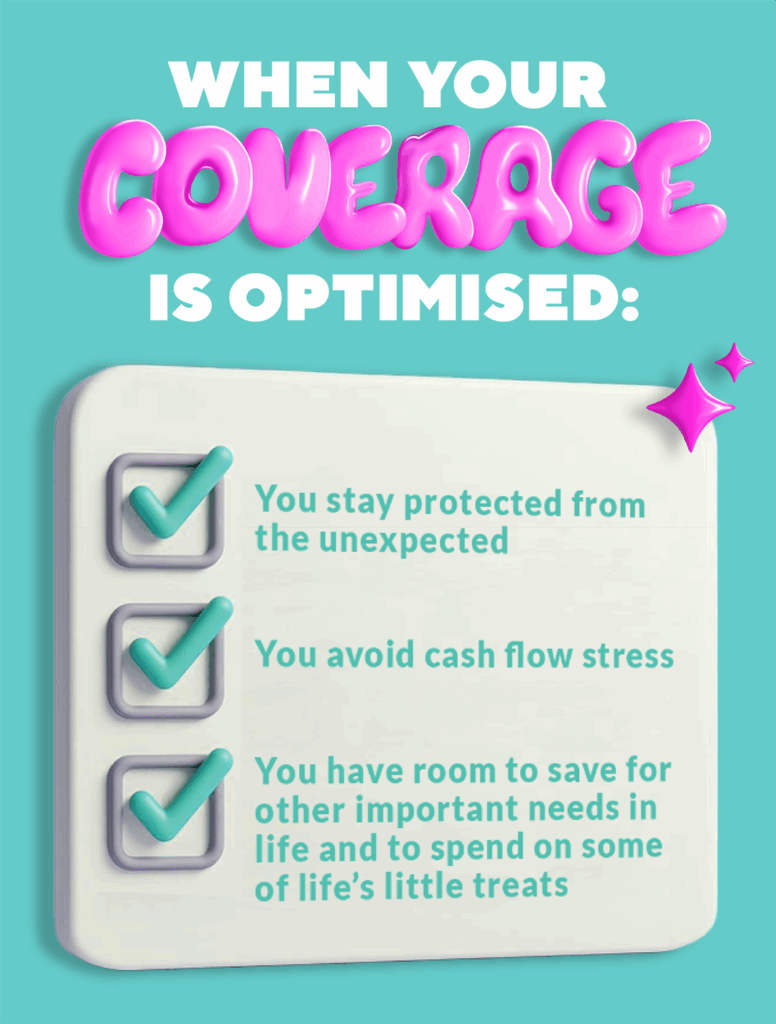
At its core, a good insurance strategy should feel like packing the right rain gear – you forget it’s there until you really need it. It’s about the freedom to live our lives with fewer financial anxieties, freedom to take calculated risks, and freedom to enjoy our hard-earned money with the people who matter most.
And we deserve that. Our careful planning and strong sense of duty are already powerful assets. With a little strategy and clarity, they can become the foundation of a rock-solid financial future for us and our loved ones.
You might even find, along the way, that you’ve saved enough for that trip to Taiwan, or that gaming setup you’ve been eyeing, or simply a quiet dinner somewhere nice.
Here’s to staying dry together!
The Safe Beacon
The information provided in this article is accurate as of the date of publication.
You might also be interested in…